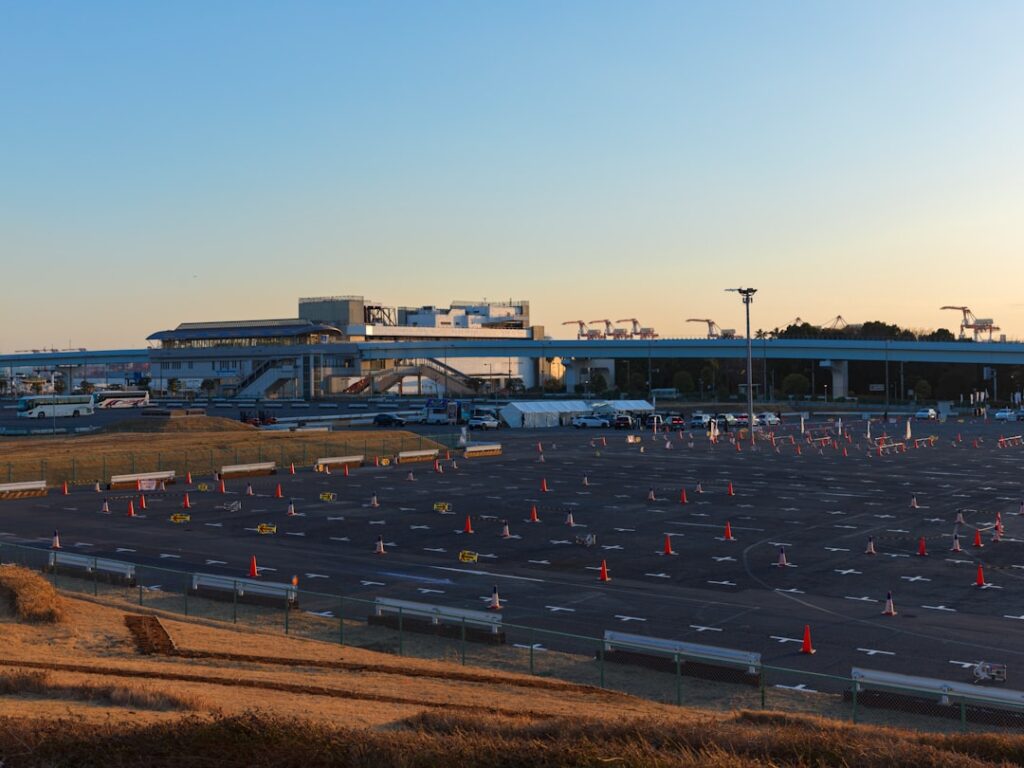

On March 5th, 2026, the official pronouncements from the corridors of power declared that the Gadeokdo New Airport construction project was “all on track.” For those of us who’ve watched this saga unfold over decades, these words ring with a familiar, almost poetic, cadence – a blend of ambition, political will, and the perpetual struggle against gravity and finance. Gadeokdo, an island outpost off Busan, has long been earmarked as the site for Korea’s audacious bid to create a new aviation hub, a southern counterpart to Incheon. But “on track” in the realm of mega-projects often means navigating a labyrinth of compromises, expedited decisions, and carefully curated narratives. A closer look reveals that while the bulldozers are indeed turning earth, the path ahead is anything but a smooth flight.
The Lingering Echoes of a Long-Awaited Dream
The Gadeokdo New Airport isn’t merely an infrastructure project; it’s a statement, a testament to regional aspirations, and a focal point of fierce political debate. Conceived as early as the 1990s, the dream of a dedicated international airport for the southeastern region of Korea has weathered countless storms, from location disputes with the proposed Miryang site to environmental concerns over its proposed reclamation. The decision to build on Gadeokdo, driven by its potential for 24-hour operations without noise complaints (being offshore), was ultimately solidified in late 2020. However, the sheer scale of building an airport on reclaimed land, essentially creating an island from scratch, makes any declaration of being “all on track” a bold one, especially with an ambitious target operational date of late 2029.
“On track” implies a predictable trajectory, a linear progression. Yet, anyone observing large-scale construction in Korea knows that bedrock, oceanic currents, and political tides are rarely linear. This project carries the weight of economic revitalization for Busan and the surrounding Gyeongsang region, aiming to unlock new logistical pathways and cement Korea’s position as a multimodal transit hub. But it also carries the burden of massive public investment and the inherent risks of pioneering engineering on an unprecedented scale. The phrase, then, is less a factual report and more a rallying cry, intended to reassure stakeholders and maintain momentum.
The Expedited Path: A Sole-Source Symphony for Access
Adding a compelling layer to this narrative, recent reports confirm that the critical access road construction for Gadeokdo New Airport is proceeding via a sole-source contract with the Hanshin Engineering Consortium. This move, while perhaps pragmatic, raises questions that any discerning critic must dissect. In the realm of public works, sole-source contracts are typically reserved for highly specialized tasks, urgent necessities, or when competition is genuinely unfeasible. For a project as significant as the primary access artery to a national airport, this decision stands out.
On one hand, expediting the access road is undeniably crucial. An airport without robust landside connections is an expensive white elephant. By eliminating the competitive bidding process, the authorities likely aim to streamline procurement, accelerate the timeline, and leverage established relationships or specific expertise. Hanshin Engineering, a reputable player, may possess unique capabilities suited to the challenging marine environment of Gadeokdo. The construction of a major bridge or undersea tunnel to connect the island airport to the mainland is a monumental undertaking, fraught with engineering complexities, and perhaps the government believes a single, trusted entity can best manage these risks.
However, the shadow of transparency and potential cost efficiency always looms over sole-source agreements. Without competitive tenders, there’s an inherent risk of inflated costs or less innovative solutions. It begs the question: was the competitive landscape truly barren, or was this a strategic decision born of urgency, perhaps influenced by the pressing 2029 deadline? This singular focus on speed, while understandable given the project’s history and political capital invested, could set a precedent that sacrifices broader market efficiencies for a perceived gain in momentum. It’s a delicate balancing act, one that requires intense scrutiny from independent watchdogs and the public.
Beyond Bricks and Bridges: Gadeokdo’s Global Ambition
If Gadeokdo New Airport is to truly be Korea’s “southern gate,” its ambition must extend far beyond its physical infrastructure. The vision is to establish a logistics and tourism hub that complements, rather than merely duplicates, Incheon’s prowess. This requires cutting-edge technology integration, smart airport features, and seamless connectivity. We’re talking about advanced air traffic control systems, AI-driven baggage handling, biometric passenger processing, and hyper-efficient cargo logistics. The island airport must become a showcase for Korean innovation, a smart city in miniature, capable of handling future aviation demands, including potentially UAM (Urban Air Mobility) integration.
Culturally, Gadeokdo could redefine Busan’s global identity. Currently, Busan is known for its port, its beaches, and its film festival. A major international airport would transform it into a more accessible global gateway, fostering increased international business, tourism, and cultural exchange for the entire southeastern region. It could become a powerful magnet for foreign investment and talent, stimulating economic diversification away from traditional manufacturing and shipbuilding. This cultural shift, from a regional port city to an international aviation nexus, is where the project’s true long-term value lies.
The Environmental Footprint and Tech’s mitigating Role
No major infrastructure project of this scale, particularly one involving significant land reclamation, can escape environmental scrutiny. The impact on marine ecosystems, water quality, and local biodiversity is a critical concern. The “on track” declaration needs to be benchmarked not just against construction schedules but also against stringent environmental compliance and mitigation strategies. This is where technological innovation must play a crucial, perhaps under-discussed, role.
Are we seeing advanced environmental monitoring systems being deployed? What sustainable construction practices are in place? Are there plans for green energy integration, such as solar or offshore wind power, to power the airport itself? A truly modern airport isn’t just about moving planes and people; it’s about minimizing its ecological footprint. If Gadeokdo aspires to be a future-forward hub, it must integrate state-of-the-art environmental technologies and showcase best practices in sustainable development. The “tech critic” in me yearns to see more details on this front, beyond mere platitudes. This isn’t just about building an airport; it’s about building an airport responsibly in the 21st century.
Key Takeaways
- Ambiguous Progress: “On track” is a political declaration rather than a definitive status for a project of Gadeokdo’s complexity and scale.
- Sole-Source Scrutiny: The decision to award the access road contract non-competitively, while potentially accelerating progress, raises questions about transparency and cost efficiency.
- Vision vs. Reality: Gadeokdo’s success hinges on its ability to integrate cutting-edge smart airport technologies and foster regional economic growth, not just complete construction.
- Environmental Responsibility: The project’s massive scale demands rigorous environmental mitigation and integration of sustainable technologies.
Practical Information for the Future Traveler (circa 2029-2030)
For those looking ahead to flying into Korea’s new southern gateway, here’s what you need to know, based on current projections as of early 2026.
- Expected Operational Date: The Gadeokdo New Airport is currently targeting an ambitious operational launch by late 2029 or early 2030. This timeline is aggressive for a project of this magnitude, and minor adjustments are always possible.
- Location: The airport will be situated on Gadeokdo Island, off the coast of Busan, in the southeastern part of South Korea. It will be the closest international airport for residents and visitors to Busan, Ulsan, and parts of Gyeongsangnam-do.
- Access & Connectivity (Planned): Upon opening, access will be a primary concern. The current plans include dedicated transportation infrastructure designed to seamlessly connect the island airport to the mainland:
- High-Speed Rail: An extension of the existing KTX/SRT network directly to the airport terminal is planned, offering rapid transit to major cities like Busan (just 20-30 minutes) and Seoul (around 2.5-3 hours).
- Dedicated Expressways: New expressways and bridges, including the one under sole-source contract, will link Gadeokdo to Busan’s existing road network, providing direct access for private vehicles, taxis, and airport buses.
- Public Transportation: Integration with Busan’s subway and bus systems is envisioned, allowing for convenient transfers from various points within the city.
- Ferry Services: While not the primary mode for most air travelers, specialized high-speed ferry links connecting to other coastal areas or tourist destinations might also be developed.
Conclusion: A Monument to Ambition, or an Engine of Progress?
As the Gadeokdo New Airport project marches forward, buoyed by declarations of being “on track,” the real challenge lies not just in its physical completion, but in its ability to fulfill the grand promises made. Will it truly become the dynamic southern gateway that transforms Busan into a global logistics and cultural nexus? Or will it remain a testament to political ambition, an expensive, underutilized infrastructure marvel? The sole-source contract for its critical access road is a sharp reminder that expediency often comes with a cost – a trade-off that will define the very character of this ambitious undertaking. We’ll be watching closely, not just the concrete and steel, but the digital veins and economic arteries that will determine if Gadeokdo truly takes flight. The runway is long, the stakes are high, and the journey is far from over.