It’s February 20th, 2026, and a palpable hum is already building across Seoul. The first whispers of spring are carried not on the crisp morning air, but through the digital ether: “When will the cherry blossoms bloom?” This annual question, a ritualistic prelude to one of the city’s most beloved natural spectacles, is more than just a meteorological inquiry. It’s the trigger for a meticulously choreographed dance between nature, culture, commerce, and the ever-present digital gaze. For ‘The Seoul Brief’, this isn’t merely an opportunity to list picturesque spots; it’s a moment to critically dissect the intricate layers of expectation, performance, and commodification that define the ephemeral beauty of beotkkot season in one of the world’s most dynamic megacities.
We’re not just talking about pretty flowers here. We’re discussing a cultural touchstone, an economic driver, and a social media battleground. Each spring, Seoul transforms, its urban grey softened by a delicate, fleeting blush of pink and white. But what truly constitutes a “recommended spot” in 2026? Is it merely a place with a high density of cherry trees, or is it a carefully curated experience, mediated by apps, influencers, and the collective desire for the perfect, shareable moment?
The Spectacle of Mass Beauty: Where Everyone Goes (and Why)
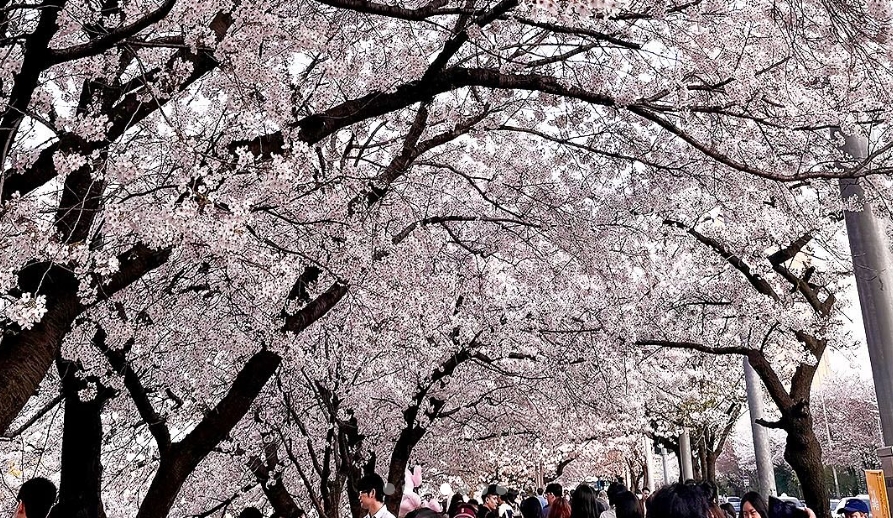
Let’s begin with the undisputed titans of Seoul’s cherry blossom landscape – the places whose very names evoke images of swirling petals and bustling crowds. Yeouido Hangang Park, specifically the Yeouiseo-ro street (formerly Yunjung-ro), remains the undisputed monarch of Seoul’s cherry blossom viewing. Its linear boulevard, canopying over the road, offers a visually stunning, almost cinematic experience. Yet, in 2026, visiting Yeouido is less about serene contemplation and more about navigating a human river. One must ask: what defines beauty when it is shared by hundreds of thousands simultaneously? The critical insight here is that Yeouido’s enduring popularity isn’t just about the sheer number of trees; it’s about its accessibility, its iconic status in popular culture, and its role as a communal urban festival ground. It’s where Seoulites and tourists alike go to participate in the ritual, even if the individual experience is one of constant negotiation with fellow sightseers. The analysis isn’t whether it’s beautiful, but whether the experience of that beauty transcends the logistical challenge. For many, it’s a necessary pilgrimage, a testament to the collective joy that, paradoxically, can be found even in overcrowding.
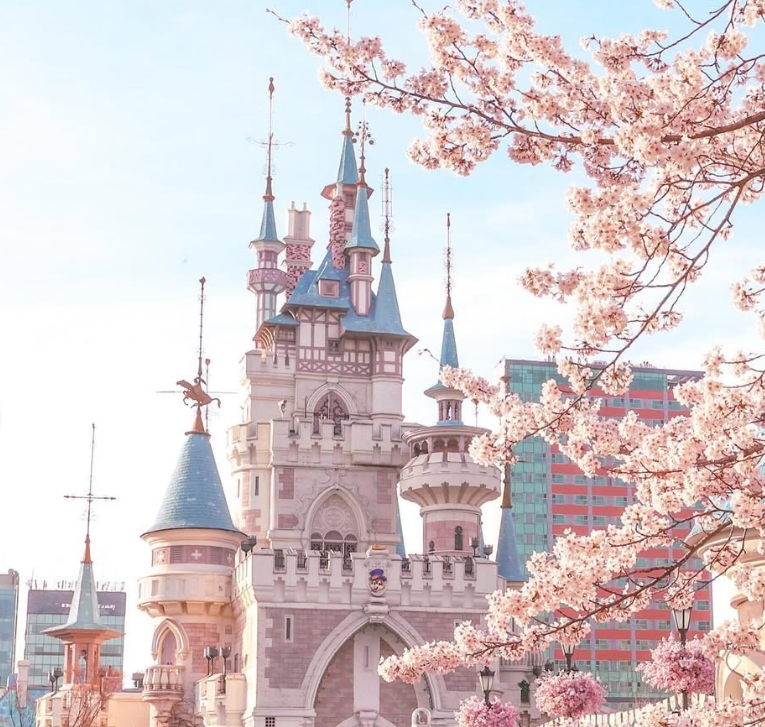
Then there’s Seokchon Lake, nestled beside the futuristic towers of Lotte World Tower. This spot offers a different kind of visual drama: blossoms framing a modern cityscape, often reflected in the calm waters of the lake. It’s a prime example of Seoul’s seamless integration of natural beauty with hyper-modern urbanism. The “recommendation” here isn’t just for the cherry blossoms themselves, but for the stark juxtaposition – a cultural snapshot of contemporary Korea. Yet, like Yeouido, it too falls victim to its own photogenic allure. The critical eye sees not just the flowers, but the queues for photos, the strategic placement of street vendors, and the subtle ways commercial enterprises capitalize on the natural wonder. Is the experience enhanced by a limited-edition cherry blossom latte, or is it merely another layer of distraction from the ephemeral glory?
Beyond the Hype: The Search for Authenticity in a Curated World
For the discerning flâneur, the true beauty of Seoul’s spring often lies in deliberately sidestepping the main arteries of petal pandemonium. Places like Seoul Forest, for instance, offer a more expansive, almost pastoral embrace of spring. Here, the cherry blossoms are part of a larger ecological tapestry, integrated with other spring flowers, walking paths, and streams. It’s less about a singular, overwhelming display and more about a holistic, contemplative experience. The critical insight is that “authenticity” in cherry blossom viewing in 2026 is increasingly tied to a sense of spaciousness, a reduced digital footprint, and a more organic interaction with nature. These spots demand a different kind of engagement, rewarding those willing to slow down rather than simply snap and move on.
Similarly, Namsan Park, with its winding paths leading up to the iconic N Seoul Tower, presents an alternative. While certainly popular, the sheer scale of the park allows for pockets of relative tranquility. The blossoms here are often seen against a backdrop of Seoul’s sprawling urban panorama, offering both natural beauty and a majestic overview of the city. The “recommendation” for Namsan comes with a caveat: choose your timing wisely. Early mornings, before the selfie sticks emerge en masse, or weekdays, often reveal a more intimate charm. This highlights a crucial point for 2026 travel: true enjoyment of Seoul’s natural beauty now necessitates strategic planning, informed by crowd-sourcing apps and a keen understanding of peak versus off-peak experiences.
The Digital Bloom: AI, Algorithms, and the Influencer Economy
No critical assessment of spring in Seoul in 2026 would be complete without acknowledging the profound impact of technology. From AI-driven apps predicting peak bloom times with startling accuracy to real-time crowd-tracking data, the cherry blossom experience is increasingly mediated by algorithms. Social media, of course, plays a dominant role. Instagram, TikTok, and their Korean counterparts are not just platforms for sharing; they are engines of discovery and, often, over-saturation. A “hidden gem” shared by one influential account can, within hours, become the next overcrowded hotspot.
This phenomenon raises critical questions about the nature of recommendations. Are we recommending a place for its intrinsic beauty, or for its potential to generate viral content? The critical cultural critic sees this as a tension between genuine aesthetic appreciation and the curated performance of it. The proliferation of AI-enhanced photography tools means that even the “perfect shot” can be digitally augmented, blurring the lines between natural beauty and digital artistry. The very act of seeking out “cherry blossom spots” has become an exercise in competitive content creation, a digital arms race for likes and shares.
Crafting the “Local100” Experience in a Global City
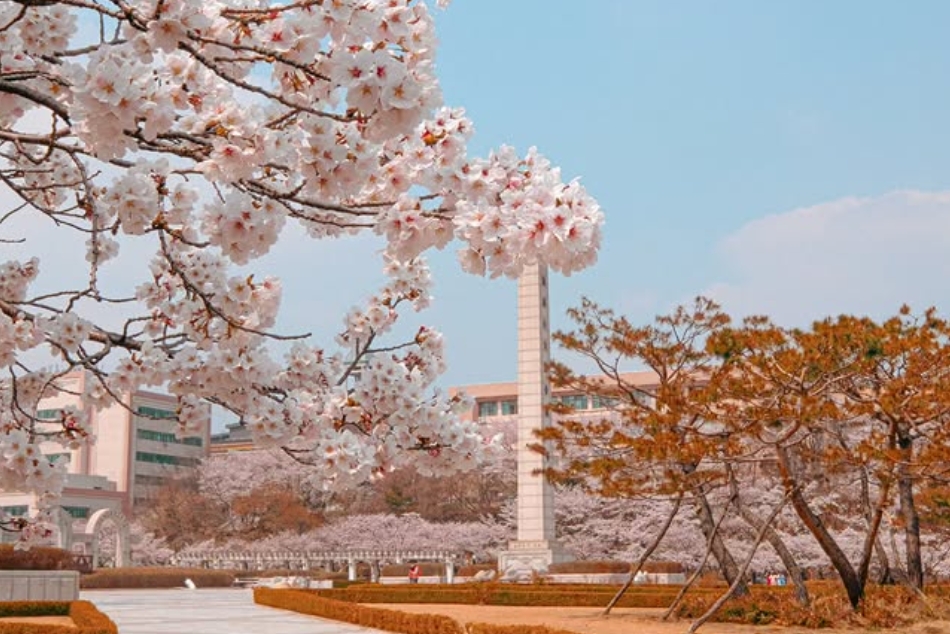
In a broader sense, this relentless pursuit of the next “best spot” or “hidden gem” in Seoul echoes recent initiatives aimed at identifying and promoting unique local attractions (like the ‘Local100’ program seen in other regions, which aims to highlight distinct local cultural assets). While Seoul is far from a “local” destination in the traditional sense, the underlying philosophy — to elevate specific, authentic experiences — is incredibly relevant. For cherry blossom viewing, this translates to seeking out smaller neighborhood parks, university campuses (like Kyung Hee University with its Gothic architecture), or even just a particularly lovely street in an unexpected district. These are the places where the blossoms might be fewer in number, but the context feels more genuinely integrated into daily Seoul life, free from the overt performance of the major tourist hubs.
The critical takeaway here is that an authentic Seoul cherry blossom experience in 2026 is no longer about following a prescribed list, but about active discovery. It requires a willingness to stray from the well-trodden path, to use technology as a guide for avoidance rather than accumulation, and to appreciate the blossoms not as a standalone spectacle, but as an integral, if fleeting, part of the city’s living, breathing fabric.
Key Takeaways for 2026 Spring Cherry Blossom Viewing:
- Anticipate and Plan: The 2026 season demands strategic timing (weekdays, early mornings) to mitigate crowds at popular sites like Yeouido and Seokchon Lake.
- Diversify Your Destinations: Explore larger, more integrated parks like Seoul Forest or Namsan Park for a more contemplative, less crowded experience.
- Embrace Local Discoveries: Seek out smaller, less-advertised neighborhood parks or university campuses for a more authentic, community-embedded view of the blossoms.
- Navigate the Digital Landscape: Utilize apps for real-time bloom predictions and crowd monitoring, but be mindful of the social media-driven hype machine.
- Prioritize Experience Over Capture: Challenge yourself to truly be in the moment, rather than solely focusing on capturing the perfect, shareable photograph.
The Editor in Chief’s Practical Guide: A Survival Strategy for Seoul’s 2026 Cherry Blossoms
For those wishing to pierce through the digital hype and confront the authentic spring, here are the specific coordinates and tactics for navigating Seoul’s 2026 cherry blossom front.
- 🌸 The 2026 Bloom Window
- First Bloom: Late March (Estimated around March 27th)
- Peak Bloom: First week of April (Estimated around April 2nd – 7th)
- Critic’s Note: Climate change has made blooming periods increasingly volatile year by year. If you want to capture the perfect moment, you must exercise the diligence of cross-referencing Korea Meteorological Administration (KMA) data and real-time social media feeds from locals starting two weeks prior.
- 📍 Yeouido Hangang Park
- Vibe: The most spectacular, yet the most grueling main battlefield.
- How to Get There: Yeouinaru Station (Subway Line 5) is highly likely to become a “crowd hell.” It is strongly recommended to strategically disembark at National Assembly Station (Line 9, Exit 1 or 6) and take a detour walk toward the Yunjung-ro area.
- 📍 Seokchon Lake
- Vibe: A dramatic juxtaposition of capitalist splendor and nature.
- How to Get There: Jamsil Station (Line 2 or 8, Exit 2 or 3). Start at the East Lake near the Lotte World Tower and walk toward the West Lake where Lotte World Magic Island is located, taking in the stark contrast between the modern skyline and the cherry blossoms.
- 📍 Seoul Forest
- Vibe: The perfect refuge for contemplation and an organic ecological space.
- How to Get There: Seoul Forest Station (Suin-Bundang Line, Exit 3) or Ttukseom Station (Line 2, Exit 8). Do not just linger in the main plaza; you must venture deep into the Eco Forest where the deer enclosure is located to find true tranquility.
- 📍 Kyung Hee University (Local’s Pick)
- Vibe: A perfect harmony of architecture and nature, imbued with local authenticity.
- How to Get There: Disembark at Hoegi Station (Line 1 or Gyeongui-Jungang Line, Exit 1), then take the Dongdaemun 01 town bus or walk for 15 minutes. The steep uphill path (affectionately known as “panting hill”) leading to the Gothic-style Grand Peace Palace creates an exotic, majestic cherry blossom tunnel unseen anywhere else in Seoul.
Conclusion
As the first buds prepare to unfurl, Seoul stands at the cusp of another cherry blossom season. Will it be a triumph of natural beauty, a testament to urban planning, or a commercialized spectacle? It will, undoubtedly, be all three. But for the informed observer, 2026 offers a chance to look beyond the dazzling façade, to peel back the layers of curation and commerce, and to discover what a truly meaningful encounter with Seoul’s ephemeral spring truly entails. It’s a challenge to find poetry in the crowds, serenity in the spectacle, and authenticity in a world increasingly shaped by algorithms. And that, perhaps, is the most rewarding recommendation of all.