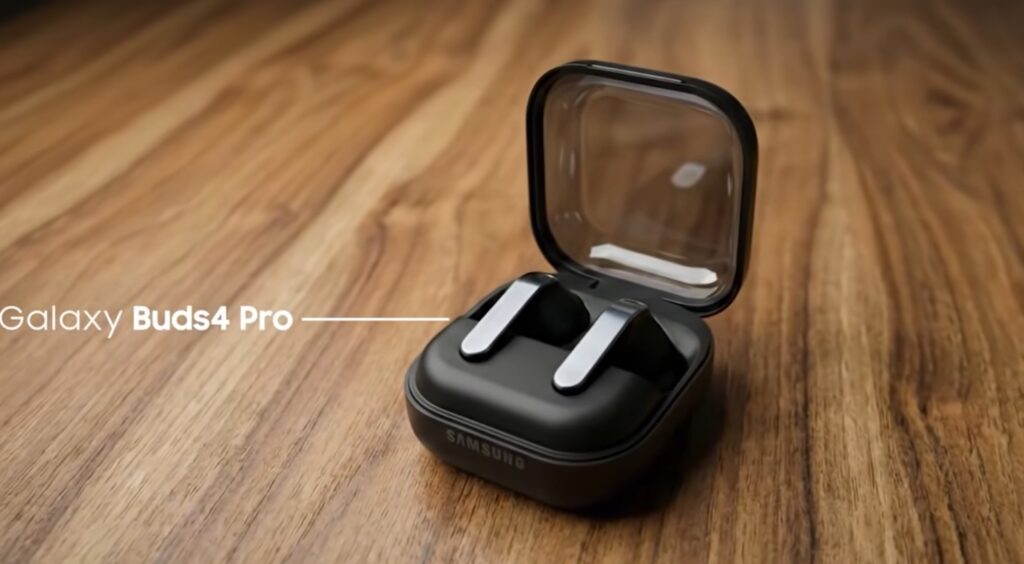

Today, February 24th, 2026, the global tech stage holds its breath. Just two days shy of Samsung’s highly anticipated Galaxy Unpacked event on February 26th, the usual torrent of leaks and official teasers has reached a fever pitch. While the spotlight has largely fixated on the AI-powered behemoth that is the Galaxy S26 series, whispers from the pre-briefings and industry dispatches paint an equally intriguing, if somewhat perplexing, picture of its accompanying audio companion: the Galaxy Buds 4.
Indeed, while the digital rumor mill, and perhaps even some internal Samsung codenames, might have hinted at a more numerically advanced ‘Galaxy Buds 8’, the concrete intelligence emerging from the trenches points squarely to the ‘Galaxy Buds 4’. This numerical regression, or perhaps a strategic reset, immediately begs the question: What’s in a name? And more importantly, what does Samsung’s choice signify for the future of its wearable audio strategy, especially when juxtaposed against an S26 lineup that promises to “transcend mobile limitations” with its AI agent capabilities?
The Curious Case of the “Buds 4”: Naming and Narrative
The decision to brand the latest iteration as ‘Buds 4’ rather than ‘Buds 8’ or some other incremental number isn’t just a trivial marketing choice; it’s a narrative statement. In an industry obsessed with higher numbers signifying progress, a step backward in nomenclature can be jarring. One could argue it’s a simplification, perhaps an attempt to align with a broader, more accessible numbering scheme, or even a soft reboot of the Buds lineage. Could it be that Samsung is acknowledging a pivot, recognizing that sheer spec bumps are no longer the primary driver, but rather seamless integration and novel interaction?
For a critic accustomed to dissecting Apple’s meticulous product refreshes, Samsung’s approach here feels refreshingly, if slightly disorienting, un-Apple. While Cupertino consistently pushes its AirPods line with predictable, incremental numerical increases and “Pro” suffixes, Samsung appears willing to play a different game. This numerical reset, therefore, might signal a new foundation for the Buds line, one where the focus isn’t on direct generational comparisons but on a new paradigm of smart audio, deeply embedded within the nascent Galaxy AI ecosystem. It’s less about a new version number and more about a new vision for what earbuds can be.
Beyond the Nod: What the Buds 4 Whisper About Samsung’s AI Future
The standout feature leaked for the Galaxy Buds 4 is deceptively simple, yet profoundly indicative of Samsung’s direction: the ability to answer calls with a “head nod.” On the surface, it’s a convenient hands-free gesture. Dig deeper, however, and it reveals Samsung’s commitment to subtle, intuitive AI-driven interaction. This isn’t just about tapping an earbud; it’s about leveraging the sophisticated array of sensors now standard in premium earbuds – accelerometers, gyroscopes, proximity sensors – to interpret micro-gestures.
This “head nod” is likely just the tip of the AI iceberg. In the context of the S26’s overarching “AI agent” strategy, it suggests that the Buds 4 are envisioned not merely as sound output devices, but as intelligent input peripherals. Imagine a future where a subtle shake of the head dismisses a notification, a focused gaze activates a voice assistant, or even a nuanced head tilt navigates spatial audio. This level of granular control, driven by on-device AI and context awareness, could transform how we interact with our digital lives, moving beyond voice commands to a more natural, almost subconscious interface. Privacy, too, as emphasized in the S26’s AI discourse, becomes paramount. How will Samsung ensure that such intimate biometric data, derived from subtle movements, remains secure and under user control? The “head nod” is a tantalizing glimpse, but the implications extend far beyond simply answering a phone.
Strategic Pricing, Shrewd Play: The Buds 4 in a Premium Ecosystem
One of the most compelling pieces of information surrounding the Buds 4 is their rumored “kind price,” strategically positioned against the anticipated price hike of the Galaxy S26. This isn’t just about affordability; it’s a shrewd, calculated move in ecosystem warfare. While the S26 series, particularly the Ultra, is expected to command a premium for its cutting-edge AI features, the Buds 4 appear designed to lower the barrier to entry into Samsung’s expanded AI universe.
By offering the Buds 4 at a more accessible price point, Samsung significantly boosts the potential for attach rates. Every S26 user, tempted by the integrated AI experiences, might find the “kind price” of the Buds 4 an irresistible gateway. This strategy isn’t new; Apple has long leveraged its AirPods to deepen ecosystem lock-in. However, Samsung’s explicit differentiation in pricing – a “kind” peripheral contrasting with a “premium” phone – suggests a more deliberate attempt to make the AI experience holistic and widely adopted, rather than exclusive. It’s a play to onboard as many users as possible into the AI-centric Galaxy, ensuring that the critical mass needed for robust ecosystem development is achieved. For the discerning consumer, this could mean a genuine value proposition, allowing access to advanced AI interactions without breaking the bank on accessories.
The Silent Specs: What We Don’t Know (Yet) and Why It Matters
Curiously, amidst the leaks detailing AI features and pricing strategy, there has been a notable silence on conventional earbud specifications for the Buds 4. Details regarding audio quality improvements, active noise cancellation (ANC) advancements, battery life, or even significant design overhauls remain largely unaddressed. This omission speaks volumes.
For years, the battle for earbud supremacy has been waged on metrics like driver size, codec support, ANC efficacy, and hours of playback. If Samsung is intentionally de-emphasizing these traditional benchmarks in its pre-Unpacked messaging, it suggests a profound shift in priorities. It implies that for the Buds 4, the “experience” of seamless AI integration and intuitive interaction has superseded, or at least taken precedence over, raw audio fidelity or class-leading noise cancellation. While audiophiles might lament this perceived neglect of core sound performance, it positions the Buds 4 firmly as a smart accessory first, and an audio device second. This could be a risky gamble, as fundamental audio quality remains a non-negotiable for many users. However, it aligns perfectly with the narrative of a future where devices communicate, anticipate, and interact on a deeper, more contextual level.
Key Takeaways
- The Galaxy Buds 4 (not Buds 8) are the latest earbud offering, debuting with the S26 series on February 26th, 2026.
- The numerical choice (‘4’ instead of a higher number) suggests a potential strategic reset or simplification of the Buds product line, focusing on a new foundation within the AI ecosystem.
- A key leaked feature, “head nod” for call answering, highlights Samsung’s commitment to subtle, AI-driven, micro-gesture interaction as a core interface paradigm.
- The Buds 4 are rumored to carry a “kind price,” a shrewd move to drive attach rates and expand access to Samsung’s AI ecosystem amidst the premium pricing of the S26.
- The lack of specific detail on traditional audio specs (ANC, sound quality, battery) signals a potential shift in Samsung’s marketing priorities, emphasizing AI integration over raw audio performance.
Practical Information: Securing Your AI-Powered Audio Gateway
For those eager to experience Samsung’s vision of AI-integrated audio, the Galaxy Buds 4 are expected to be available for pre-order immediately following the Unpacked event on February 26th, 2026. General availability is anticipated to roll out rapidly, likely by early to mid-March 2026.
These new earbuds will see a global launch, available through Samsung’s official online store (samsung.com) and major authorized retailers worldwide. In South Korea, expect them at Samsung Digital Plaza locations, as well as prominent online marketplaces like Coupang and Gmarket. Internationally, they will be stocked at electronics giants such as Best Buy, Amazon, and other regional retailers. Given their tight integration with the Galaxy ecosystem, existing Galaxy users will find the pairing and setup process remarkably seamless. For those looking to be among the first to explore the “head nod” revolution, marking your calendar for the Unpacked debut is your first step to access this intriguing new chapter in personal audio.
Conclusion: A Gamble on Gesture, A Future Defined by AI
The Galaxy Buds 4 are more than just a pair of headphones; they are a critical piece of Samsung’s ambitious AI puzzle. By repositioning its earbuds not as mere audio output devices, but as intelligent, gestural interfaces within a sophisticated AI ecosystem, Samsung is taking a calculated risk. The “kind price” is a savvy play to maximize adoption, while the emphasis on subtle interaction via features like the “head nod” points towards a future where technology fades into the background, responding to our most natural cues.
The ultimate success of the Buds 4, however, will hinge on whether this AI-first approach resonates with users, and if the unspoken audio qualities live up to the unspoken expectations. Is Samsung sacrificing the fundamental promise of great sound for the allure of futuristic interaction? Or is this a prescient glimpse into a world where our devices truly become extensions of ourselves, seamlessly integrating into the fabric of our lives, one subtle nod at a time? The answer will begin to unfold in just two days, and the implications for the future of personal tech are profound.